
Bell’s palsy occurs when the facial nerve becomes inflamed and swollen, losing its ability to transmit signals to the facial muscles. But what causes this inflammation in the first place? The short answer is: in most cases, we do not know for certain — which is actually part of the definition of Bell’s palsy.
In this article, we discuss the most commonly identified triggers and risk factors for Bell’s palsy, and explain why the facial nerve is particularly vulnerable.
Please note that Bell’s palsy is technically a diagnosis of exclusion — it is given when no specific cause for the facial palsy can be identified. When a cause is known (such as herpes zoster in Ramsay Hunt Syndrome), it receives a different name. However, in everyday language, Bell’s palsy is often used to describe any form of peripheral facial palsy, and we follow that convention here.
Viral reactivation: the most likely trigger
The most widely accepted theory is that Bell’s palsy is triggered by the reactivation of a dormant virus, most commonly herpes simplex virus type 1 (HSV-1) — the same virus responsible for cold sores.
Most people carry HSV-1 without knowing it. The virus remains dormant in nerve ganglia (clusters of nerve cells) for years or decades. Under certain conditions — such as stress, illness, or immune suppression — the virus can reactivate. When it reactivates near the facial nerve, it causes inflammation and swelling.
The facial nerve passes through a narrow bony canal (the fallopian canal) inside the skull. When the nerve swells inside this tight space, it becomes compressed. This compression disrupts the nerve’s ability to conduct electrical signals to the facial muscles, resulting in paralysis. You can read more about how this damage unfolds in our article on the long Bell’s palsy recovery timeline.
Other viruses have also been associated with facial palsy, including varicella-zoster virus (which causes Ramsay Hunt Syndrome), Epstein-Barr virus, and cytomegalovirus.
Stress
Stress is one of the most frequently reported triggers by Bell’s palsy patients. While stress alone does not directly damage the facial nerve, chronic or acute stress can suppress the immune system, potentially allowing a dormant virus to reactivate.
Many of our patients report that their Bell’s palsy occurred during or immediately after a period of intense emotional or physical stress — such as a major life event, overwork, sleep deprivation, or illness.
Pregnancy
Pregnant women, particularly in the third trimester and the first week after delivery, have a higher risk of developing Bell’s palsy compared to the general population. The exact reason is not fully understood, but it is thought to be related to fluid retention (which can increase pressure on the facial nerve), hormonal changes, and changes in immune function during pregnancy.
Diabetes
People with diabetes have a significantly higher risk of developing Bell’s palsy. Diabetes can affect blood vessels and nerves throughout the body (diabetic neuropathy), making the facial nerve more vulnerable to damage from inflammation or compression.
Upper respiratory infections
Bell’s palsy sometimes follows a cold, flu, or other upper respiratory infection. This is consistent with the viral reactivation theory — an active infection can stress the immune system enough to allow a dormant virus to reactivate.
Cold exposure and drafts
Many patients report that their Bell’s palsy began after exposure to cold air, a draft, or air conditioning directed at the face. While there is limited scientific evidence directly linking cold exposure to facial nerve damage, the association is reported frequently enough to be worth mentioning. One possible explanation is that cold exposure may trigger vascular changes or viral reactivation in susceptible individuals.
Other risk factors
Additional factors that may increase the risk of Bell’s palsy include: a family history of Bell’s palsy (suggesting a possible genetic predisposition), high blood pressure, obesity, and previous episodes of Bell’s palsy (recurrence happens in approximately 5-10% of cases).
Why the facial nerve is so vulnerable
What makes Bell’s palsy possible is the unique anatomy of the facial nerve. It is the longest nerve that passes through a bony canal without protection. The fallopian canal is very narrow, and the nerve fits tightly inside it. Even a small amount of swelling can compress the nerve against the bony walls, cutting off blood supply and damaging the nerve fibres.
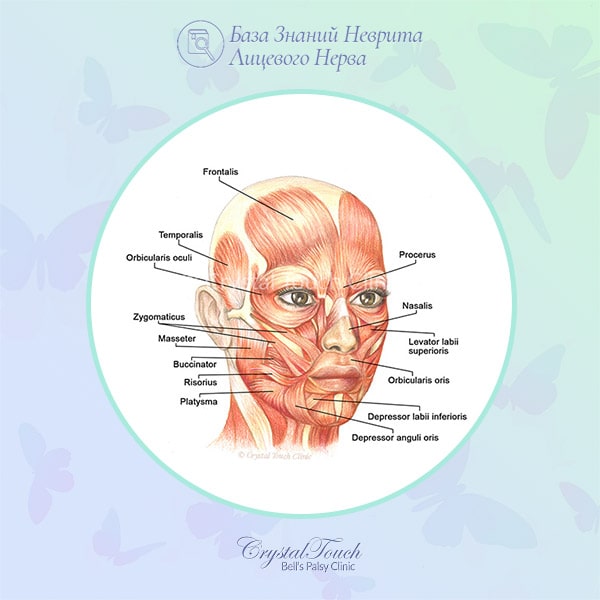
This is why even a mild inflammatory trigger can lead to significant paralysis — the facial nerve simply has no room to swell without consequences. You can learn more about the structure of the facial nerve in our article: Our facial muscles and their functions.
Can Bell’s palsy be prevented?
Because the exact trigger is usually unknown, Bell’s palsy is difficult to prevent. However, maintaining a healthy immune system through adequate sleep, stress management, and managing underlying conditions like diabetes may reduce the risk.
If you have already experienced Bell’s palsy and want to understand your condition better, you can book an online video consultation or browse our Bell’s palsy knowledge base for more detailed information.