
Facial exercises are one of the most commonly recommended remedies for Bell’s palsy. However, not all exercises are helpful, and some can actually cause harm – especially if done at the wrong stage of recovery. Understanding what to do and when to do it can make a significant difference in your outcome.
In this article, we explain which facial exercises can support your recovery, which ones to avoid, and why timing matters.
Please note that in this article, we discuss peripheral facial palsy. We use the terms “Bell’s palsy” and “facial palsy” interchangeably for simplicity, as is common practice. For information about recovery after surgical or traumatic facial nerve damage, please contact us.
Why facial exercises are a sensitive topic
When Bell’s palsy strikes, it is natural to want to “train” the affected muscles back into action. Many doctors, physiotherapists, and online sources recommend starting facial exercises as soon as possible. However, the reality is more nuanced than that.
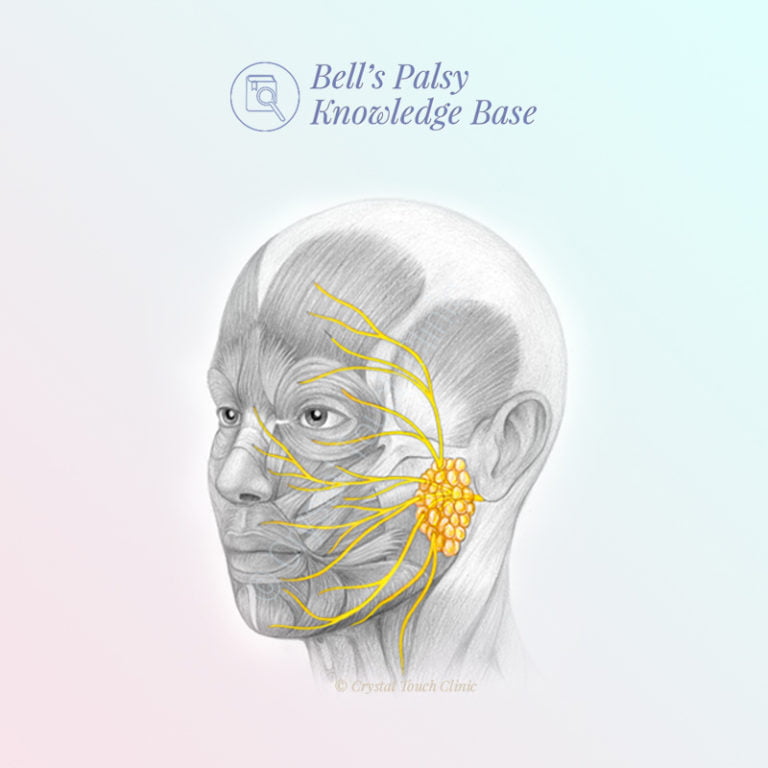
The facial nerve controls your facial muscles. When the nerve is damaged, your muscles are not weak in the traditional sense – they are disconnected from the brain. No amount of exercise can speed up nerve regeneration. The nerve needs to heal first, and only then can the muscles begin to respond again.
Aggressive exercises during the early stages – when the nerve has not yet recovered – can lead to complications. The most common of these is synkinesis, a condition where involuntary movements develop alongside voluntary ones.
The acute phase (first 2-4 weeks): what to do
During the acute phase of Bell’s palsy, the facial nerve is healing. At this point, your facial muscles may be completely paralyzed on the affected side.
During this period, forceful exercises are not recommended. What you can do: try to keep your face relaxed as much as possible. Do not try to force any movements while looking into the mirror, and do not do any facial exercies. Instead, do soft and gentle facial massages to keep your face relaxed. If you feel any paid, stop massaging.
What you should avoid: repetitive, forceful contractions like hard squeezing of the eyes, exaggerated smiling, or blowing up balloons. Chewing gum is another commonly recommended activity that can actually be counterproductive during recovery.
The key principle during the acute phase is: less is more. Your nerve needs time to heal, not stimulation.
When movements start returning
The first signs of recovery appear when you notice small twitches, vibrations, slight voluntary movements.
At this stage, it is still really important to refrain from any facial exercices. Your facial nerve recovers gradually. So beginning with any type of facial exercises now, will engage only the nerve fibers that reconnected, not the whole facial nerve. This will lead to partial facial muscle involvement. It will put strain on the facial muscle fibers that did get reconnected with the facial nerve, to try to move the whole muscle. This can cause unwanted pains, facial contractures, and can further lead higher level of synkinesis in the future. So our advice at this stage remains the same as in the early stage: avoid mirrors, do not do facial exercisese or force your face into facial expressions. Instead, relax your face, do gentle facial massages, and focus on conscious relaxation.
What to avoid at every stage
Certain practices are commonly recommended but can be harmful throughout recovery:
- Electrical stimulation of the facial muscles is sometimes offered by physiotherapists. However, electrical stimulation bypasses the natural nerve-muscle connection and can contribute to synkinesis. We advise against it.
- Forceful, repetitive exercises such as hard blinking, exaggerated grimacing, or resistance training for facial muscles can cause or worsen synkinesis.
- Massage with strong pressure on the affected side can irritate the tissues and does not contribute to nerve healing. If you do any massages or use warm compresses, keep them gentle.
If synkinesis has already developed
If you notice that your eye closes when you smile, or your mouth pulls when you blink, synkinesis has likely developed. At this point, general facial exercises can make things worse.
What helps in this situation is a targeted approach: learning to isolate specific muscle groups and working with the brain to separate the movements that have become linked. This is a core part of the Neuro-Proprioceptive Rehabilitation method that we use at Crystal Touch clinic.
You can learn more about managing synkinesis in our articles: What you can do yourself to reduce synkinesis and Which recovery methods can help reduce synkinesis.
How we can help
If you are unsure about which exercises are appropriate for your stage of recovery, or if your progress has stalled, an online video consultation can help clarify your situation. During the consultation, we can assess your current condition and provide specific guidance on what you should and should not be doing.